Respect the Atlantic: What Montauk's Most Seasoned Captains Know About Surviving Storm Season
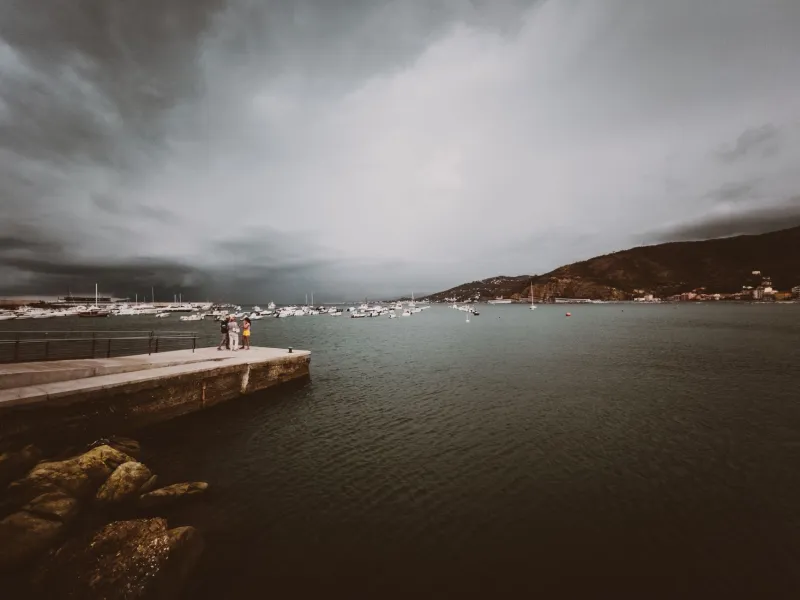
There's a saying that floats around Montauk's docks every June: the ocean doesn't care how experienced you are. It's the kind of thing you hear from a grizzled captain nursing a coffee at the end of the pier, and it sounds almost cliché — until you've watched a nor'easter roll in off the Atlantic and swallow the horizon whole. Then it makes perfect sense.
Montauk sits at the very tip of Long Island's South Fork, exposed on three sides to open water. That geography is exactly what makes it one of the most dramatic sailing destinations on the East Coast. It's also what makes storm season here a genuinely serious affair. From June through November, hurricane season overlaps with the early stirrings of nor'easter weather, and the sailors who call this place home have developed a culture of preparation that borders on ritual.
We talked to several local captains and longtime marina regulars to get the real story on how Montauk's sailing community braces for rough weather — and when the smartest move is simply to stay put.
Know Your Season, Know Your Threats
Montauk faces two distinct categories of serious weather. Hurricanes and tropical storms arrive from the south and southeast, typically between August and October. Nor'easters, on the other hand, are a cold-weather phenomenon that can strike from October all the way through April, driving sustained northeast winds and punishing seas across the open Atlantic fetch.
These storms behave differently, and experienced sailors treat them differently. A hurricane often comes with days of advance warning, giving you time to make deliberate decisions. A nor'easter can intensify faster than forecast models predict, especially when it stalls offshore. "The nor'easters are the ones that catch people off guard," says one captain who's kept a boat at Star Island Yacht Club for over twenty years. "You look at the forecast Thursday night and it says fifteen knots. By Saturday morning you've got forty, and the guys who didn't take it seriously are scrambling."
The 72-Hour Rule (And Why It Matters)
Among Montauk's experienced sailors, there's an informal consensus around what some call the 72-hour window. When a significant storm system appears in the forecast three days out, that's your cue to start making decisions — not waiting to see how it develops.
Decisions at that stage include: Is your boat in the right slip? Are your lines adequate for the expected wind direction? Should you haul out entirely? The earlier you act, the more options you have. Wait until the storm is 24 hours away and you're competing for haul-out slots, scrambling for extra dock lines, and making choices under pressure that you should've made calmly two days prior.
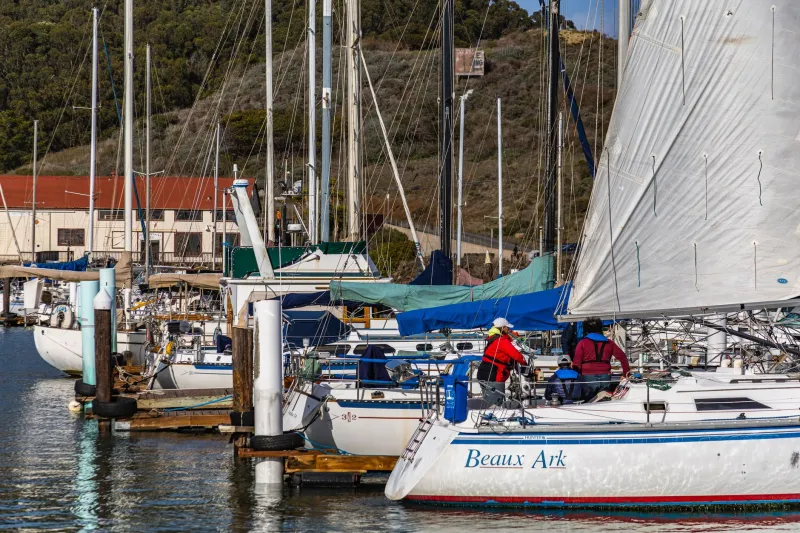
For boats staying in the water, proper line configuration is everything. Experienced sailors in Montauk typically double up on dock lines well ahead of a storm, using spring lines to limit fore-and-aft movement and adding chafe protection wherever lines run through chocks or over cleats. "Chafe kills dock lines faster than anything," one local rigger told us. "I've seen brand-new half-inch line cut through in six hours during a bad blow. Wrap it, protect it, check it."
Reading the Sky Before the App Tells You
Modern weather apps are genuinely useful, and no one's suggesting you ignore them. But Montauk's longtime sailors will tell you that local knowledge still fills gaps that no algorithm can. The way clouds stack to the southwest, the particular color of the sky at dusk, a sudden drop in barometric pressure on your boat's analog barometer — these are signals that experienced eyes have learned to read over years on this specific stretch of water.
A few patterns worth knowing: a rapidly falling barometer (more than 0.06 inches of mercury per hour) is a serious warning sign regardless of what the forecast says. A backing wind — one that shifts counterclockwise, from south to southeast to east — often signals an incoming low-pressure system. And the classic "red sky at morning" adage? It holds up more often than you'd expect out here.
The National Weather Service office in Upton, New York issues marine forecasts specifically for the coastal waters around Montauk, including the offshore zones. Checking those forecasts, not just the generic "beach weather" apps, is considered basic due diligence by anyone serious about sailing out of here.
When to Stay Ashore: The Hardest Decision
Here's the part nobody likes to talk about: sometimes the right call is to not go out at all. And making that call — especially when you've got crew aboard, or you've been planning a passage for weeks — takes a particular kind of discipline.
The sailors who've been doing this the longest are almost universally better at saying no than younger, less experienced ones. That's not a coincidence. Experience teaches you what a building sea state feels like before it gets dangerous, and it also teaches you that the ocean will still be there next weekend.
"I've turned around more times than I can count," admits one captain who runs offshore passages regularly out of Montauk. "And every single time I did it, I was right. You develop a feel for when the numbers on paper don't match what the water is actually doing."
For newcomers, a practical rule of thumb: if the forecast shows sustained winds above 25 knots with gusts into the 30s, and you're not an experienced offshore sailor with a properly equipped boat, that's a stay-ashore day. Full stop. Montauk's exposed coastline and the strong tidal currents around its eastern tip can turn moderate conditions into genuinely hazardous ones within a short distance of the inlet.
Storm Prep Checklist: The Dock-Side Essentials
Whether you're riding out a storm at the marina or preparing to haul out, here's what the local captains consistently recommend:
- Double up dock lines and add spring lines in both directions
- Add chafe guards at every point of contact — old garden hose works well in a pinch
- Remove canvas and sails — dodgers, biminis, and furled headsails can all act as wind scoops
- Check bilge pumps are operational and the float switch is working
- Secure loose gear on deck and below; anything that can move will move
- Note your neighbors' boats — if an adjacent boat breaks free, it becomes your problem
- Have a plan for checking in — let someone know your boat's status and your own location
The Psychological Side Nobody Mentions
Storm preparation isn't just physical. There's a mental component that experienced sailors talk about openly — the discipline to resist the urge to "just check on the boat" during peak conditions when being at the dock is genuinely dangerous, the patience to wait out a system that's stalling offshore, and the humility to accept that some passages simply don't happen on schedule.
Montauk's sailing community handles this partly through connection. Sailors here tend to look out for each other's boats, share weather observations over the radio and in person, and maintain an informal network of local knowledge that no app can replicate. If you're new to keeping a boat here, plugging into that community — at the marina, at the yacht clubs, at the docks — is one of the most valuable things you can do before storm season ever arrives.
The Atlantic off Montauk is extraordinary. It's also unforgiving. The sailors who love it most are the ones who've learned, sometimes the hard way, to treat it accordingly.